
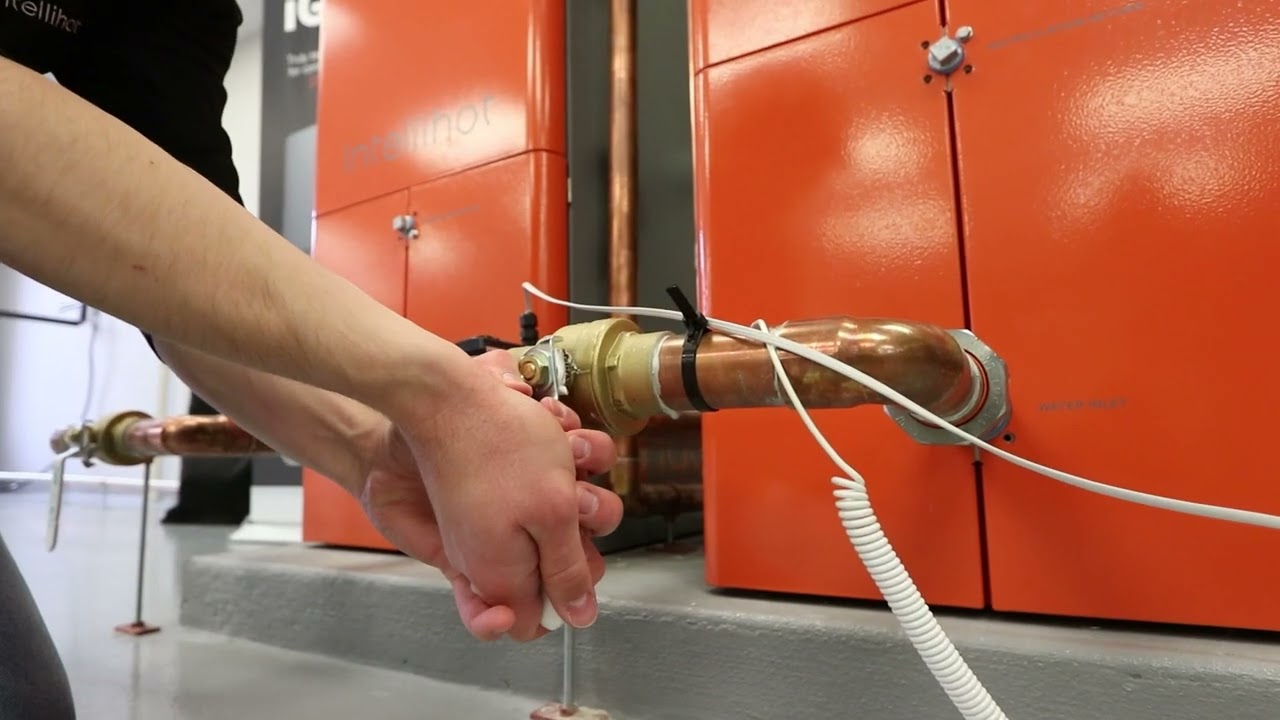
Every commercial plumber and facility manager knows the dreaded “bang” echoing through a boiler room. That sound isn’t just an annoying quirk of a building’s piping; it is the sound of hydraulic shock actively damaging your equipment.
When it comes to commercial water heater maintenance, ignoring water hammer is a recipe for disaster. Let’s break down exactly what causes it, the risks it poses to your high-efficiency systems, and the simple startup steps you can take to prevent it.
Water hammer (hydraulic shock) occurs when water flowing through a pipe is suddenly forced to stop or change direction. Because water is largely incompressible, that kinetic energy has nowhere to go. It sends a high-pressure shockwave crashing back through the piping system.
In commercial plumbing systems, this is typically caused by:
You might hear a loud bang, but the real damage is happening where you can’t see it. The pressure spikes from water hammer can easily exceed the design limits of your pipes and commercial tankless units.
If left unaddressed, water hammer will cause:
The most common, completely avoidable cause of water hammer happens right at startup or after a maintenance shutdown. When bringing an Intellihot commercial water heater (or any boiler) back online, patience is your best tool for water hammer prevention.
If you open the main water inlet valve too fast, the sudden rush of high-pressure water slamming into empty pipes and internal components will cause immediate shock.
Watch this quick tip from our startup series on exactly how to introduce water back into the unit:
While proper valve operation is critical during startup, your overall system design must also account for pressure spikes during daily operation.
Lunch & Learn for Engineers

Robbie Svidron,
Sales Engineering & Education Manager
B.S. in Mechanical Engineering
*We will send a DoorDash gift card for virtual meetings.